
Laser Applications for Defence & Aerospace
Defence and aerospace manufacturing operates under some of the most demanding
conditions applicable in any industry. Components must meet extreme standards for
precision, reliability, weight reduction and traceability, while performing under high stress,
temperature variation and harsh environments. Manufacturing processes must deliver zero-defect quality, repeatability and full compliance with stringent aerospace and defence
regulations.
Laser-based manufacturing has become a critical enabler across airframes, propulsion
systems, avionics, electronics and defence hardware. Its ability to deliver controlled, non-contact energy with high accuracy and digital repeatability makes laser processing ideally
suited for both aerospace-grade materials and mission-critical components.
Laser Micro-Machining for Structural Components, Turbine Blades and Electronics
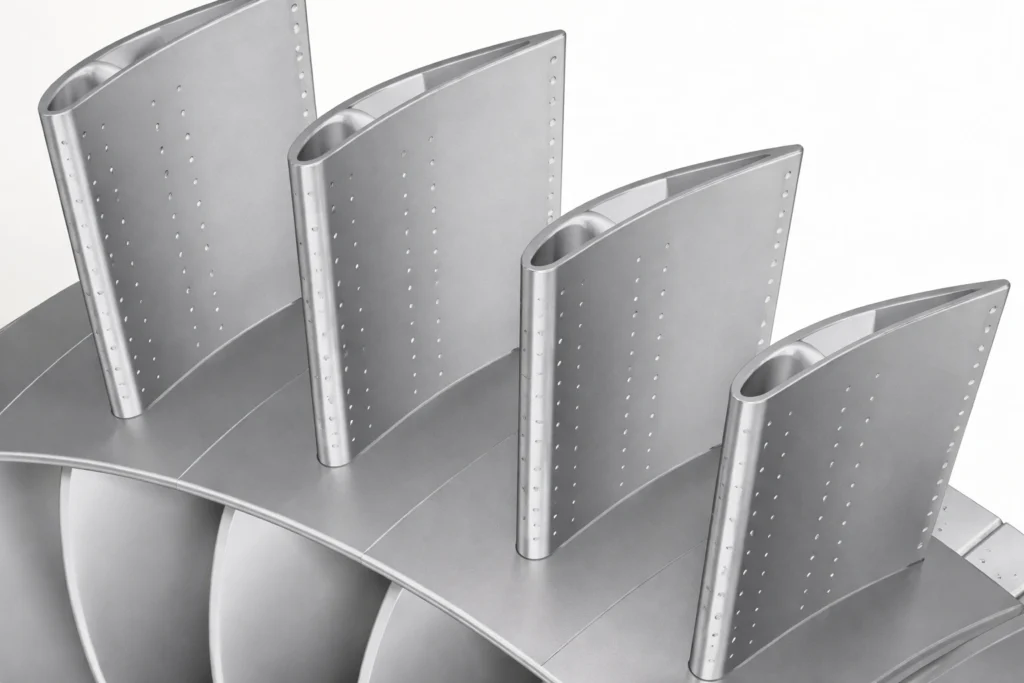
Application Demand
Aerospace-grade metals, composites and electronic components require precise drilling,
scribing, cutting and marking with tight tolerances. Surface integrity, minimal thermal impact
and micron-level accuracy are critical for fatigue resistance, component reliability and
electrical performance. The applications include structural parts, turbine blades, cooling
channels, connectors, PCBs and sensors.
What Laser Enables
Laser micro-machining provides high-precision, non-contact material processing with
minimal heat-affected zones. It ensures repeatable accuracy, preserves material properties
and supports automated production across structural, thermal and electronic components.
Complex geometries, micron-scale features and tight tolerances are achieved without
mechanical stress or substrate damage.
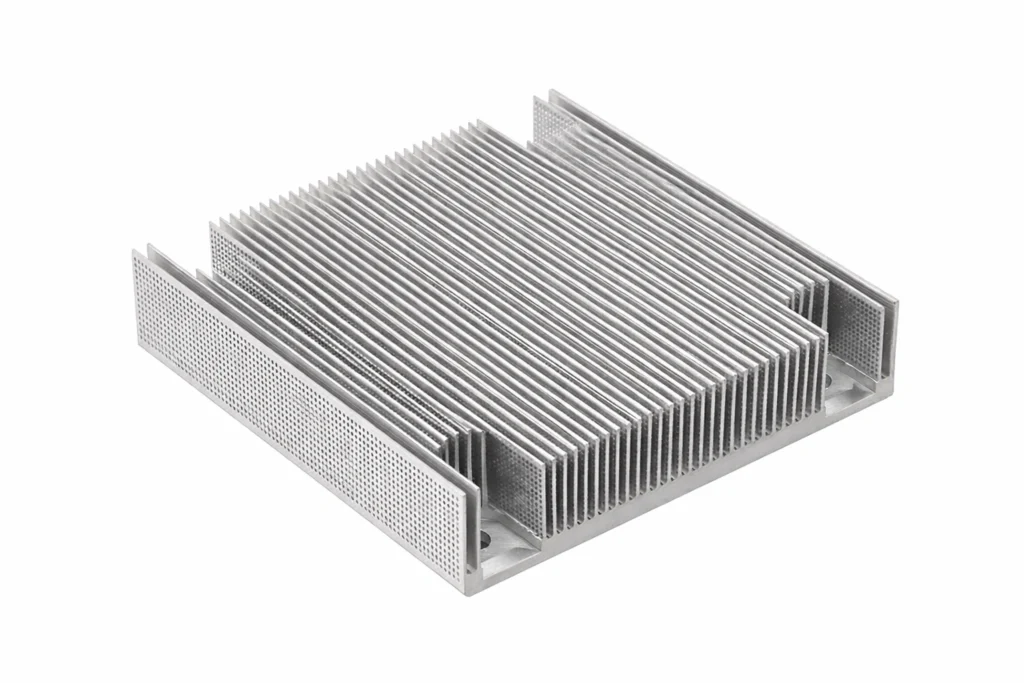
Laser Drilling for Cooling Channels
Application Demand
Turbine blades and combustor components require micron-scale cooling channels to manage
extreme temperatures and thermal stresses. Accuracy and uniformity are critical for airflow
efficiency, performance and component longevity.
What Laser Enables
Laser drilling delivers precise, repeatable micro-holes with controlled diameter, taper and
spacing. The non-contact process ensures minimal HAZ, preserves structural integrity and
enables optimized thermal management for high-performance turbine components.
Laser Marking for Turbine Components and Brake Disks
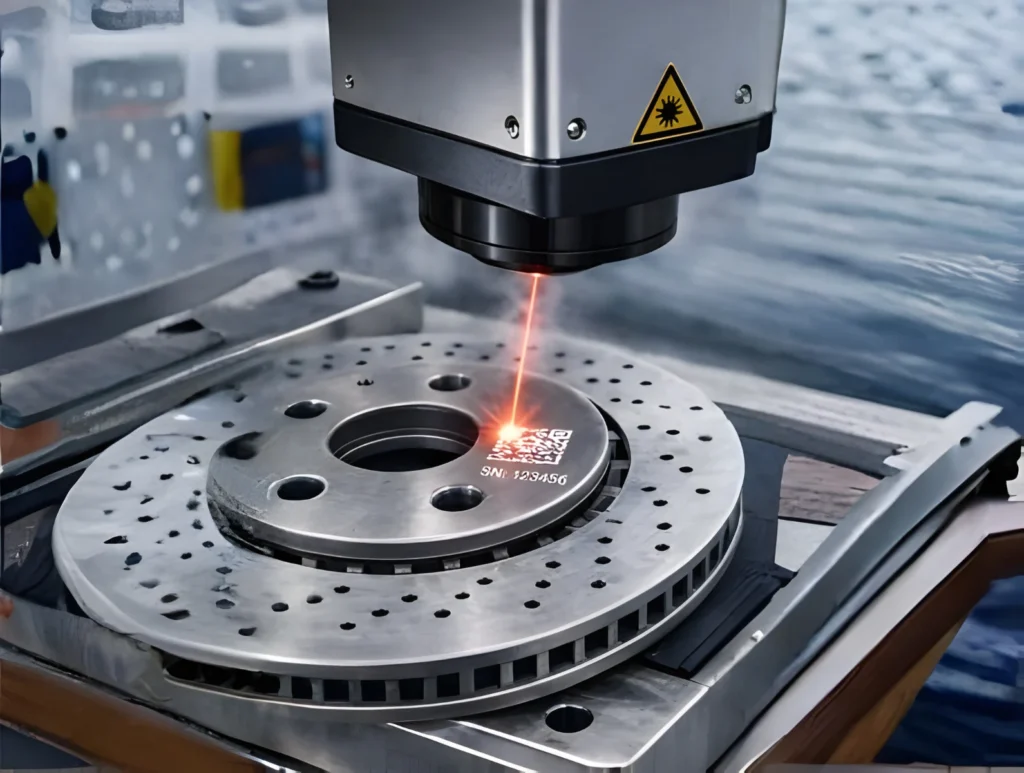
Application Demand
High-temperature aerospace and defence parts require durable, high-contrast identification
for traceability, maintenance and lifecycle management. Markings must withstand extreme
temperatures, vibrations and operational stress.
What Laser Enables
Laser marking provides permanent, heat-resistant and climate resistant identifiers on metals
and composites. It ensures readability under harsh conditions, supports traceability and
enables maintenance compliance without damaging the base material.
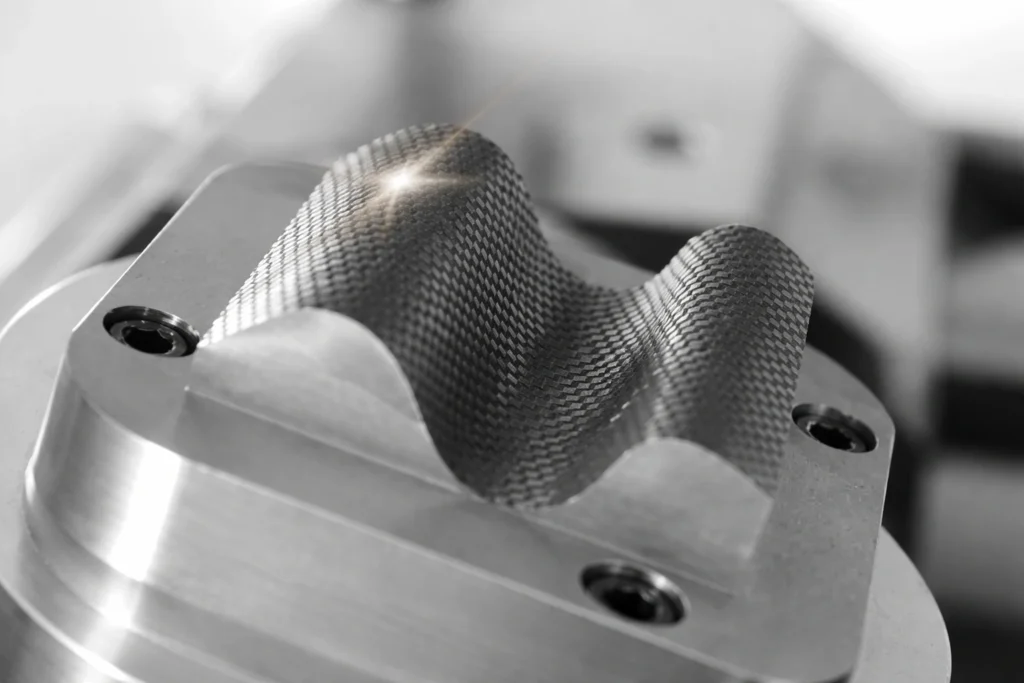
Laser Texturing & Surface Preparation
Application Demand
Aerospace components often require controlled surface roughness to enhance adhesion for
thermal spray coatings, bonding and painting. Inconsistent surface preparation tends to
reduce bond strength and coating longevity.
What Laser Enables
Laser texturing creates precise, repeatable micro and macro-structures to improve coating
adhesion, bonding strength and heat transfer. The process is non-contact, chemical-free and
compatible with high-volume production, enhancing performance and durability of coatings
and bonded components.
Laser Cladding and Repair
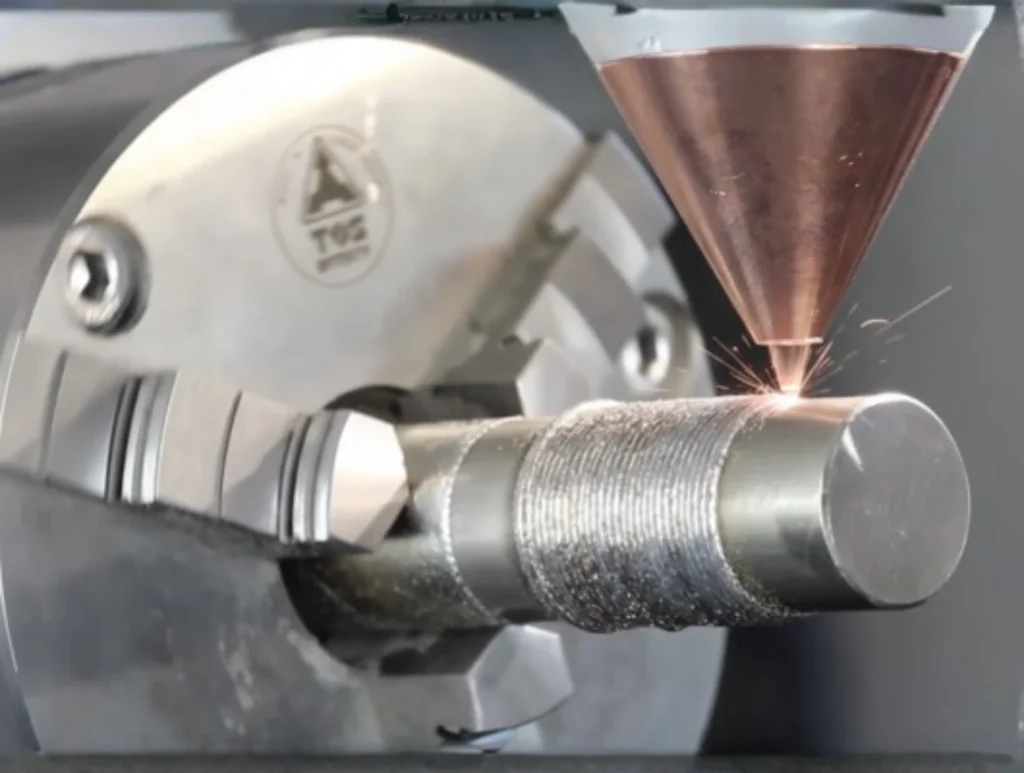
Application Demand
High-value aerospace components like turbine blades, compressor discs and structural parts
may need surface restoration or enhancement to improve wear, oxidation and corrosion
resistance. Conventional repairs often compromise on dimensional accuracy or material
properties.
What Laser Enables
Laser cladding enables localized material deposition with controlled dilution and minimal
HAZ. It restores surface geometry, enhances wear and corrosion resistance and extends
component life without affecting base material integrity.
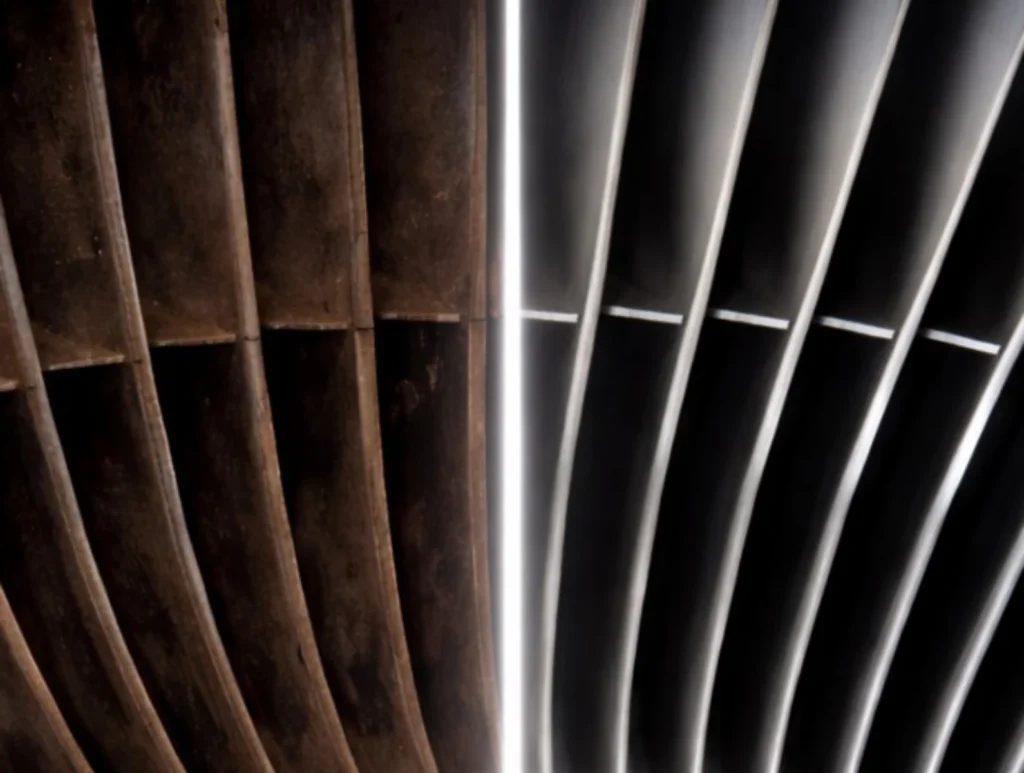
Laser Ablation for Coating or Insulation Removal
Application Demand
Aerospace and defence components often require selective removal of coatings, oxides and
insulation layers prior to bonding, welding or assembly. Traditional mechanical or chemical
methods risk substrate damage or contamination.
What Laser Enables
Laser ablation provides precise, non-contact layer removal with micron-level control. It
preserves substrate integrity, ensures clean surfaces for subsequent processing and supports
high-throughput automated production.
Laser Cutting & Texturing of Advanced Composites
Application Demand
Aerospace structures increasingly use carbon fiber, thermoplastics and reinforced composites
for lightweighting. Cutting or texturing must maintain dimensional accuracy without fraying,
delamination or heat damage.
What Laser Enables
Laser cutting and texturing deliver clean edges and controlled surface features with minimal
thermal or mechanical impact. The process ensures dimensional precision, supports highstrength bonding, coating and painting, and is ideal for complex composite geometries.
Why Choose Light Mechanics
Light Mechanics delivers application-driven laser solutions designed for the most demanding
aerospace and defence environments. Our systems combine high precision, automation
compatibility and scalability, enabling repeatable, zero-defect production at high volume
Laser Micro-Machining for Structural Components, Turbine Blades and Electronics.