
Upcoming Highlights
Laser Hardening Technology
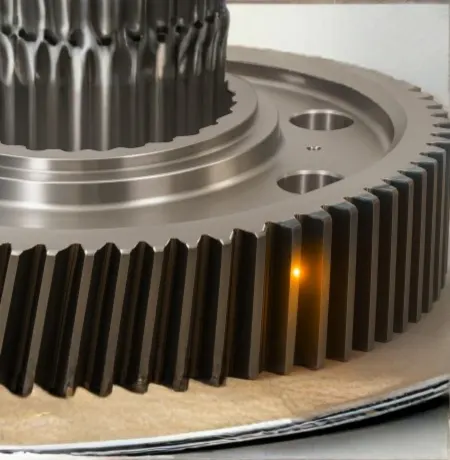
Laser Hardening In modern manufacturing, component failure rarely begins at the core – it starts at the surface. Component wear, fatigue and surface degradation are the primary reasons why critical parts fail prematurely. This is where laser hardening technology is redefining surface treatment by delivering strength exactly where it is needed, without compromising dimensional accuracy.Laser hardening is rapidly emerging as the preferred solution for industries that demand durability, precision and repeatable quality. Contact Us The Goal of Introducing Laser Hardening The objective of laser hardening is simple yet powerful:To increase surface hardness and wear resistance while preserving the original core properties of the component.By applying controlled, localized heat only to critical zones, laser hardening helps industries achieve: Longer component life Higher resistance to wear and fatigue Minimal distortion Faster processing compared to conventional heat treatment Consistent, repeatable results suitable for automation This makes laser hardening ideal for high-load and high-precision applications where traditional methods often fall short. What Is Laser Hardening? Laser hardening is an advanced surface heat-treatment process in which a focused laser beam rapidly heats the surface layer of a metal component. Once the laser moves away, the heat dissipates naturally into the bulk material, causing self-quenching. This rapid heating and cooling transforms the surface into a martensitic hardened layer, while the core remains unchanged. Contact Us Key Characteristics of Laser Hardening Typical hardening depth: 0.5 to 2.5 mm No external quenching media required Clean, controlled and highly repeatable process Suitable for carbon steels, alloy steels, tool steels and automotive-grade steels Why Laser Hardening Is the Preferred Choice? Localized Heating for Precision Laser Hardening heats up only the required surface area which needs to be hardened. This protects adjacent features and ensures dimensional stability – critical for precision components. Extremely Low Distortion Compared to flame or induction hardening, laser hardening produces negligible warpage, reducing or eliminating post-processing and straightening. High Surface Hardness Laser-hardened surfaces achieve excellent hardness levels: 42CrMo: up to HRC 55–60+ Tool steels: up to HRC 58–62+ Automation and Repeatability The process is easily automated, making it ideal for batch production with consistent quality across parts. Applications Supported by Laser Hardening Laser hardening is widely used in applications where surfaces are exposed to friction, impact, or cyclic loading. Gears and Power Transmission Spur and helical gears Gear teeth strengthening and repair Splines and couplings Automotive Components Shafts and axles Cam followers and rocker arms Crank journals Industrial Machinery Rollers and guide rails Wear plates and sliding surfaces Tooling and Dies Punches and moulds Cutting edges Shear blades These applications benefit from improved wear resistance while maintaining tight tolerances and structural integrity. Why Laser Hardening Makes Sense Today As industries move toward lighter designs, tighter tolerances, traditional heat-treatment methods struggle to keep up. Laser hardening offers a modern alternative which is much cleaner, precise and efficient. It is particularly effective where: Controlled hardness is critical Distortion cannot be tolerated Only selective areas require strengthening With laser hardening technology, Light Mechanics is preparing to deliver reliable, high-performance surface treatment solutions for automotive, tooling, industrial machinery and heavy engineering applications.Laser hardening is not just about making parts harder – it’s about making them last longer, perform better and stay accurate with tight tolerances.
Laser Cladding Technology
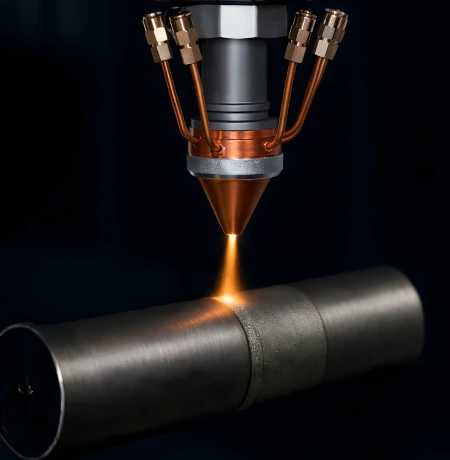
Laser Cladding Technology Laser Cladding is an advanced additive manufacturing process widely used across industrial sectors for high-performance surface restoration and enhancement. It rebuilds worn or damaged components with exceptional precision and minimal thermal impact, creating a strong metallurgical bond. The resulting dense, durable layers significantly improve wear, corrosion and fatigue resistance while preserving dimensional accuracy of critical parts. Contact Us Materials & Alloys Supported Stainless steels, carbon and alloy steels, tool steels, Ni-based and Co-based alloys, iron-based wear-resistant and hard-facing materials. Key Applications Dimensional restoration of worn shafts, rollers and hydraulic cylinders Repair and protection of pump components, valve seats and bearing housings Wear- and corrosion-resistant surfaces for mining, cement, steel, and heavy machinery components Turbine parts, wear rings and bearing components in power generation Die, mould and tooling repair with controlled build-up and minimal post-machining Why Laser Cladding Extends component life and reduces downtime Enables cost-effective refurbishment instead of part replacement Precise layer-by-layer deposition with controlled thickness Low thermal input preserves base material properties High-density, pore-free coating Improved surface hardness and wear resistance Clean before-vs-after results showing complete recovery of worn surfaces Major Industries Utilizing Laser Cladding Aerospace Repair and modification of turbine blades, engine components and landing gear with high precision and minimal thermal distortion. Oil & Gas Protection of drilling tools, valves and pipelines against extreme wear, corrosion and chemical exposure. Automotive Improved wear resistance for engine parts, shafts and gears widely adopted for brake disc coatings that reduce fine dust emissions by over 90%. Mining Restoration and protection of hydraulic cylinders and drilling equipment operating in highly abrasive and corrosive underground conditions. Power Generation Refurbishment of boiler components and turbine blades, often extending service life by up to three times in high-temperature environments. Agriculture & Forestry Surface protection of cutting tools such as saw blades, disc harrows and counter blades against severe soil abrasion. Manufacturing & Tooling Refurbishing moulds, dies and extruder housings as a durable, environmentally safer alternative to hard chromium plating.Laser cladding is ideal for applications where conventional welding or thermal spraying causes excessive dilution, distortion, or premature failure. With this technology, Light Mechanics is positioned to deliver high-performance surface solutions for heavy-duty and precision industrial applications.