Light Mech

Blogs

Your blog category

Blogs

How Light Mechanics Delivers Production-Ready Laser Machines – Right the First Time

How Light Mechanics Delivers Production-Ready Laser Machines – Right the First Time From Enquiry to Production Excellence In today’s high-precision manufacturing environment, laser machines are no longer just tools on the shop floor – they are strategic assets that define product quality, throughput and competitiveness.Whether it’s welding, cutting, marking, drilling or surface treatment, manufacturers demand laser systems that deliver high speed, absolute repeatability, and zero compromise on quality. Achieving this consistently requires more than powerful hardware – it demands a deeply validated process and a quality-first engineering approach.At Light Mechanics, we don’t just manufacture laser machines. We deliver validated, production-ready laser solutions – engineered to perform reliably from day one and throughout their lifecycle.This is how we do it. Quality Is Not Inspected. It Is Engineered. Our philosophy is simple:True quality is built into the process, not checked at the end.That’s why every project at Light Mechanics follows a structured, end-to-end execution model. Starting from the first enquiry to production handover, we ensure our customers receive machines that are stable, scalable and future-proof. Our End-to-End Laser Project Journey 1. Application Discovery & Requirement Alignment Every successful laser solution starts with understanding your application in depth. We collaborate closely with your engineering and production teams to define: Material, thickness and joint/feature geometry Quality expectations – mechanical, electrical and cosmetic Production targets, cycle time and scalability Automation, safety and compliance needs This upfront clarity allows us to design the right solution from the beginning, avoiding costly changes later.2. Process Feasibility & Risk AssessmentBefore committing to a solution, our experts evaluate: Technical feasibility of the laser process Metallurgical and thermal risks Automation and fixturing challenges Safety and compliance considerations This step ensures no assumptions, no surprises – only proven engineering decisions.3. Laser Process Development & Optimization Using customer samples, we develop a robust and repeatable laser process by optimizing: Laser type and power Optics and beam delivery Speed, pulse characteristics and focus position Shielding gas parameters (where applicable) The result is a wide, stable process window designed for real-world production – not just lab success. 4. Sample Trials & Quality VerificationOur in-house sample trials validate that the process meets real manufacturing expectations: Weld integrity, penetration and strength Edge quality and heat-affected zone control Marking grade, contrast, readability and permanence Testing may include destructive and non-destructive methods such as tensile tests, crosssections and visual inspections – ensuring measurable confidence before scaling up. 5. Repeatability & Production Capability Validation A laser process is only valuable if it performs consistently at scale.We validate: Repeatability across batches, shifts and operators Long-run stability Cp (process capability) and Cpk (process capability index) values wherever applicable This guarantees that your laser system is ready for continuous production, not just prototype success.6. Automation, Tooling & Smart Integration Laser performance depends on the ecosystem around it.Our validation extends to: Automation and cycle-time optimization Precision fixturing and part handling Vision systems, seam tracking and inline weld monitoring PLC logic, safety interlocks and HMI workflows Every system is designed to maximize uptime, accuracy and operator confidence.7. Design Approval Process (DAP): Confidence Before Commitment Once the solution is finalized, we conduct a Design Approval Process (DAP) with the customer. This structured review ensures: The machine is fit for the application All quality, safety and regulatory requirements are addressed Risks are identified and mitigated The design is ready for execution It acts as a gate between design and execution, ensuring the laser machine will meet application, quality, safety and compliance requirements by design, and not by correction later. 8. Precision Manufacturing, Internal QA & Pre-Dispatch Inspection Every laser machine is built under strict internal QA controls and undergoes a comprehensive Pre-Dispatch Inspection (PDI) to confirm: Build accuracy as per approved design Functional and safety compliance Readiness for shipment, installation, and acceptance Only machines that meet 100% of defined criteria leave our facility.10. Installation, Commissioning & Process Qualification At your site, our engineers: Install and qualify the machine (IQ) Perform commissioning and functional verification Conduct process trials under real production conditions (OQ / PQ) This helps in full qualification of the machine at site, performing reliably under real production conditions and ready for controlled scale-up without operational risk.11. Training, SAT & Production Handover Operator and maintenance training Site Acceptance Testing (SAT) Complete documentation and support handover Warranty and service support begin Machine is released for production At this stage the machine is formally accepted, your teams are fully enabled, and the laser system is confidently released for uninterrupted production.More Than Machines – We Deliver Manufacturing ConfidenceAt Light Mechanics, we believe that successful laser manufacturing is not just about machine delivery. It’s about process ownership by combining: Structured process validation Robust quality assurance Thoughtful automation design Customer-centric execution High-precision manufacturing leaves no room for uncertainty. Choosing the right laser machine is not just about specifications – it’s about process understanding, validation and long-term reliability.At Light Mechanics, we partner with you from the very first enquiry to full-scale production, ensuring every laser solution is engineered, validated and delivered with confidence. Have a laser application to evaluate or a production challenge to solve?Reach out to us today to discuss your requirement, share samples and explore how our validated laser solutions can support your manufacturing goals.Let’s engineer precision – right from the first step. Talk to an expert Article By:Shipra Sinha (Director – Sales & Marketing, Light Mechanics) LinkedIn: www.linkedin.com/in/shipra-sinha-50179961
Blogs

Laser Marking enabling Traceability, Compliance & Efficiency across Industries

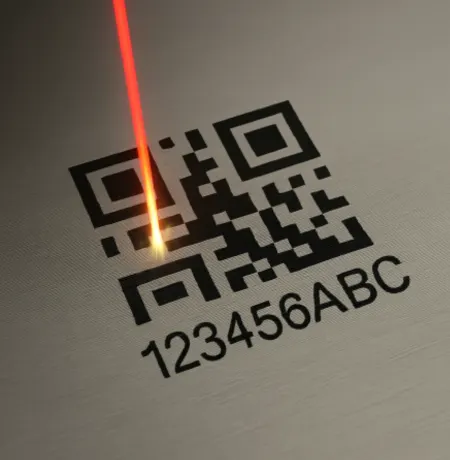
Laser Marking enabling Traceability, Compliance & Efficiency across Industries Laser Marking for Smart Manufacturing: Enabling Traceability, Compliance & Efficiency Across Industries Introduction In today’s performance-oriented manufacturing world, international regulations, supply chain needs and quality check processes require absolute traceability and product identification. Be it the production of automotive parts, aerospace components, electronics or medical devices, the capacity to use permanent, legible, and tamper-proof marking is essential.This is where laser marking has emerged as a revolutionary solution. Laser marking is a contactless operation where a concentrated beam of laser is applied to produce permanent marks like serial numbers, QR codes, barcodes, logos, etc on various materials. The process provides ultimate accuracy, speed, and reliability and hence is the best choice in place of conventional marking methods. Actual power of laser marking is in the capacity to produce end-to-end traceability, a feature that’s more vital in industries as they head towards intelligent and regulated production This growing attention is being led by a number of important factors: 1. Regulatory compliance: In India the industries for automotive, aerospace, medical equipment, defence and so on are well regulated and hence complete traceability is demanded by different regulatory bodies. Automotive: Part level traceability is mandatory as per AIS (Automotive Industry Standards) and CMVR (Central Motor Vehicles Rules) for quality compliance. Medical Devices: Medical Device Rules-2017 prescribes implementation of UDI (Unique Device Identification) for traceability. Defence: Defence Ministry and DGQA follow UID (Unique Identification) marking for all defence critical parts. Aerospace: The AS9100 must be adhered so that quality and safety can be in balance. 2. Product Recalls and Risk Management If a faulty product is launched into the market, traceability enables effective recall management, as the costs and reputational damage for large scale recalls are too high. Traceability also enables quicker root cause analysis and corrective measures, thus minimizing the chances of failures. 3. Supply Chain Transparency Since most components are now being procured on a global or multi-vendor basis, manufacturers have to ensure supplier compliance and authenticity of parts. Traceability systems aid the auditing process that is required for quality certifications like ISO 9001 and IATF 16949 standards in India. 4. Anti-Counterfeiting and Brand Protection Traceability solutions help identification and authentication of genuine parts, avoiding utilization of counterfeit items, which is a massive threat in defense, electronics, and automotive industry. Permanent marking with unique identifiers becomes challenging to duplicate or alter.With increasing demand for credible traceability, the right marking technique is vital. Various marking solutions exist such as inkjet printing, dot peen marking, chemical etching, and foaming. Therefore, the question that arises is: if there are various marking solutions already present, why select laser marking?To determine the most effective marking method it is extremely important to compare the essential competencies of each process. Key Parameters Comparison: Laser Marking vs. Traditional Methods The table indicates that traditional marking techniques are applicable to certain applications, but they aren’t stable and adaptable. And on the other hand laser marking produces high resolution, permanent marks without contact or need for consumables, it is compatible with all materials, and can easily be integrated into an automated production line. These are some reasons that prove laser marking is a better, faster and more scalable solution for today’s traceability requirements across each industry.This table emphasizes the strength and versatility of laser marking in a variety of industries. But its success depends significantly on employing the right kind of laser. There are various types of lasers, and not every laser works best for every material and every application, it depends on the laser’s power and wavelength.Types of Lasers and their Applications in Industrial MarkingLaser marking is a process that is widely used on different materials. It is ideal for metals, plastics, glass, ceramics, paper, leather as well as heat-sensitive or reflective surfaces. This enables you to count on it for marking of parts and products in multiple sectors including, automotive, electronics, aerospace, defense, medical and more guaranteeing clear and permanent identification.It can be used for marking on a wide range of material such as metals and non-metals with several types of information. Common Data and Identifiers Marked Using Laser Technology Alphanumeric Codes Barcodes 1D QR Codes 2D Data matrix Codes Serial/Part/Model Numbers Company Logos Certification Marks (e.g. CE, ISI) and many more… Laser Marking in Different Industries 1. Automotive Industry VIN (Vehicle Identification numbers) Powertrain, Engine and transmission parts Brake components and tyres Gearbox and drive shafts Airbags and seatbelt components Mirrors 2. Aerospace Industry Turbine blades and engine components Airframe structures Fasteners, bolts, and rivets Housings and connectors Aircraft identification plates 3. Defense Sector Weapon components Ammunition casings Optical and targeting equipment Communication devices Military vehicle parts UID labels as per MoD/DGQA guidelines Helmets and tools 4. Electronic components PCB’s and semiconductor wafers Battery cells and housings Sensors and connectors Switches, relays, and terminal blocks Laser Marking Advantages and Limitations Apart from the flexibility and utility in a variety of applications, laser marking features the following advantages over conventional marking technologies. Advantages of Laser Marking Permanent & Tamper-Proof: Marks withstand abrasion, solvents, and heat High Accuracy & Clarity: Ideal for micro-marking and complex codes Non-Contact Process: No damage to fragile components Environmentally Friendly: No chemicals or consumables used Low Maintenance: Long equipment life and minimal servicing Automation-Friendly: Easily integrates into smart factory line Laser marking has many benefits, such as precision, durability and time efficiency, but it has certain limitations as well, Lasers have high initial costs than conventional marking. Improper settings can result in damage on the sensitive parts. Colour marking is limited to certain materials and laser sources. Laser marking is not just an option for part labelling, it’s a key technology for creating wiser, traceable and more efficient production systems. Its capability to provide permanent and exact marks on various materials makes it a fundamental part of modern manufacturing. Laser marking proves out be a pioneering technology in the evolving, automation inclined and accountable manufacturing.If you are exploring marking solutions for your production requirements, our team at

Blogs

Why Laser Battery Welding Is More Complex Than It Looks

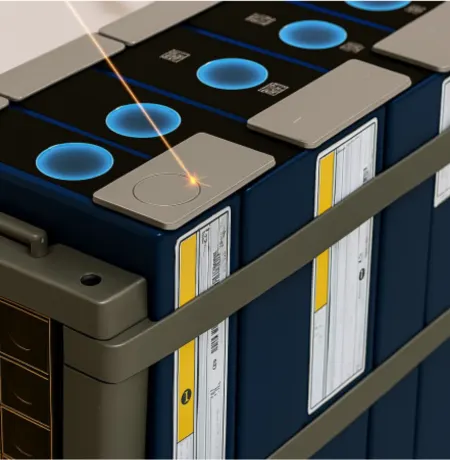
Why Laser Battery Welding Is More Complex Than It Looks Laser welding has become the backbone of modern EV battery and energy storage manufacturing. From cell tabs and busbars to terminals and housings, lasers enable highspeed, low-distortion joining that traditional welding methods cannot match.At first glance, laser battery welding may seem simple. Customized gantry dimensions based on battery module size Precision motion for cell-to-busbar and terminal welding Advanced vision systems for weld position correction Integrated press-and-weld systems to reduce air gaps In-built conveyor for automated line integration Upgradable with Inline Weld Monitoring System Integrated cooling, fume extraction and safety enclosures But in reality, it is one of the most demanding and safety-critical joining processes in battery manufacturing. Even micron-level variations in components or process conditions can affect electrical conductivity, mechanical strength, thermal behaviour and long-term battery safety. The factors influencing weld quality can be grouped into five core areas: Materials, Geometry, Tooling, Laser process, Automation and Monitoring. 1. Cell-to-Cell Height Variation and Geometry In real battery production, no two cells are perfectly identical. Variations arise from manufacturing tolerances, stacking errors, material and busbar inconsistencies. Laser welding is extremely sensitive to focus position. Small changes in cell height or joint geometry can cause the laser focal point to shift away from the optimal plane. Impact on weld quality: Inconsistent penetration depth Wider or unstable weld pools Increased spatter and porosity Reduced electrical and mechanical strength Without active height compensation, these variations can result in weak or latent defects that only appear after cycling. 2. Assembly Accuracy and Fit-Up Quality Proper joint fit-up is essential for stable laser welding. Misalignment between tabs, busbars and cell terminals compromises weld integrity of the joint.Even microscopic air gaps between joining surfaces can act as thermal barriers, preventing consistent keyhole formation. Impact on weld quality: Incomplete fusion High electrical resistance Irregular weld geometry Increased reject rates Precision assembly and consistent positioning are critical for repeatable results. 3. Material Type, Coatings and Variability Battery welding involves challenging materials such as Copper, Aluminum, Hilumin, Nickel, Alloys and other plated substrates. These materials when welded together, differ significantly in reflectivity, melting point and thermal conductivity.Dissimilar metal joints further complicates the process due to uneven melting behaviour and metallurgical incompatibility (low miscibility).Impact on weld quality: Back reflection and unstable absorption of laser energy Formation of brittle intermetallic compounds (IMCs), hot cracks, porosities and uneven mixing of metals Reduced joint strength and increased contact resistance Material batch variations and coating thickness inconsistencies can also shift the welding process window considerably. 4. Surface Condition and Cleanliness Laser welding requires clean, oxide-free surfaces. Contaminants such as oil, moisture, dust or oxide layers interfere with laser energy absorption and molten pool stability. Trapped contaminants can vaporize during welding, resulting in increased spatters and results in internal voids and porosity Impact on weld quality: Gas cavities, voids and porosity Excessive spatter generation Reduced joint strength and increased contact resistance Consistent cleaning and controlled production environments are essential. 5. Tooling plays a defining role in battery laser welding. Poorly designed fixtures or non-uniform clamping forces can introduce air gaps, distort components and cause positional variation during welding.Tooling systems without vision or sensing feedback may struggle to accommodate part-topart tolerance variations, while insufficient or unstable clamping can allow component movement and air-gaps during welding – resulting in inconsistent weld quality and unacceptable defects. Impact on weld quality: Variable penetration and fusion Weld misplacement Electrical performance variability A precision-engineered, thermally stable and compliant tooling is critical for consistent weld quality in battery welding. 6. Laser Focus Position and Beam Delivery The quality of a laser weld depends heavily on the type of laser, its beam quality, spot size and focus stability. Even slight deviations in focus caused by cell to height variations, optics contamination and mechanical vibrations can significantly alter energy density at the weld joint. Impact on weld quality: Over-penetration or lack of penetration Excessive heat-affected zone Inconsistent weld nugget geometry Stable and defect free-optics, proper maintenance and focus monitoring are essential for good battery welding. 7. Laser Power Stability and Energy Control Laser power stability refers to the ability of a laser source to deliver consistent output energy over time. Battery laser welding demands highly precise and repeatable energy input, as even small power fluctuations can destabilize the weld pool. In addition, inconsistent pulse shaping can cause sudden energy spikes, leading to weld pool instability and material ejection in the form of spatter.Highly conductive materials such as copper and aluminum further increase process sensitivity, requiring tight control over power ramps, pulse duration and peak energy to achieve stable penetration and fusion.Impact on weld quality: Porosity and micro-cracking Excessive spatter and metal ejection Inconsistent or variable penetration depth Selecting a robust laser source with advanced power regulation, precise pulse shaping, optimized beam control and beam shaping feature significantly improves process stability and overall weld integrity. 8. Welding Speed and Motion Accuracy Laser welding quality is directly influenced by travel speed and motion system accuracy. Inconsistent speed, vibration or backlash in motion systems leads to uneven energy distribution along the weld seam.Impact on weld quality: Irregular weld bead Localized overheating or lack of fusion Poor repeatability across parts High-precision motion systems are essential, especially in high-throughput battery assembly lines. 9. Spatter and Particle Management Spatter is not merely a cosmetic concern in battery laser welding. It consists of molten metal droplets ejected from the weld pool that can adhere to surrounding surfaces and create serious risks in battery manufacturing. Spatter represents material loss from the weld zone, reducing the amount of material available for proper fusion and weakening the joint. More critically, spattered metal particles can contaminate sensitive battery components, increasing the risk of internal short circuits and long-term reliability issues.Spatter generation is strongly influenced by energy density, focus stability, surface conditions and shielding gas effectiveness.Impact on weld quality: Material removal from weld zone Damage to separators and insulation layers Increased risk of internal electrical failure As a result, spatter-minimized welding strategies are mandatory in battery applications

Blogs

Precision in Motion: The Power of Laser Cross Welding

Precision in Motion: The Power of Laser Cross Welding Overcoming the Challenges of Continuous Coil Joining with Precision Laser welding Technologies Introduction Why Laser Cross Welding Matters In continuous metal strip processing lines such as electrical steel manufacturing, annealing lines, slitting lines, and lamination production coil end joining is a critical operation. Any interruption, weak joint, or dimensional inconsistency directly impacts productivity, downstream machine stability, and final product quality.Joining ultra-thin metallic strips (30 µm to 500 µm) is especially challenging. Conventional joining methods such as mechanical shearing followed by resistance or arc welding struggle with: Edge deformation and burr formation Excessive heat input Poor joint alignment Large heat-affected zones (HAZ) Reduced magnetic or mechanical properties Laser Cross Welding addresses these challenges by enabling precise, low-heat, high-speed butt welding, specifically engineered for thin and sensitive materials. The Fundamental Challenge: Welding Ultra-Thin Strips 1. Thickness SensitivityUltra-thin strips (as low as 30–50 microns) are extremely sensitive to: Heat input fluctuations Beam misalignment Clamping inaccuracies Even minor instability can cause: Burn-through Excessive bead height Distortion or tearing 2. Edge Preparation and AlignmentTraditional coil joining systems rely on: Mechanical punching or shearing Separate cutting and welding stations This introduces: Burrs on cut edges Inconsistent joint gaps Misalignment during transfer For thin materials, even a 20–30 µm gap can cause incomplete fusion or weak joints. 3. Heat-Affected Zone (HAZ) Control In applications like GOES / NGO electrical steel, excessive HAZ can: Degrade magnetic properties Increase core losses Reduce transformer efficiency Conventional welding processes struggle to limit HAZ when joining long strip widths at speed.4. Continuous Production ConstraintsIn annealing or slitting lines: Coil changeover time must be minimal Floor space is limited Process repeatability is critical Multiple stations and manual intervention increase downtime and variability. Light Mechanics Laser Cross Welding Solution Light Mechanics has engineered a purpose-built Laser Cross Welding Machine designed specifically to handle: Ultra-thin metallic strips High-speed coil joining Inline or batch operation Key Design Philosophy Minimize handling, minimize heat input, and maximize repeatability Single Laser Head – Multiple Functions One of the core strengths of the system is the use of a single fibre laser head that performs: 1. Precision cutting of strip ends 2. Butt welding at controlled energy density 3. Localized pre-heating for post-processing 4. Laser notching for weld identification All operations are software-controlled no mechanical repositioning required. Precision Fixturing for Thin Materials Inclined Fixture ConceptInstead of cutting the strip edges at an angle, the fixture itself is oriented at ±15°, while the strips remain straight. This provides: Higher dimensional accuracy Better repeatability Simplified alignment Clamping & Alignment Pneumatically actuated clamps Spring-loaded anodized base for thermal stability Proximity sensors to confirm true butt contact This ensures zero overlap and zero gap before welding. Post-Weld Conditioning: A Critical Advantage Pre-HeatingImmediately after welding, the joint is locally pre-heated using the same laser head. This softens the weld region and prepares it for flattening. Pneumatic Hammering Low-force hammering (4–5 strokes) Hardened embossed support surface Final bead height ≤ 50% of base material thickness This ensures: Smooth strip passage through rollers No interference in downstream processes Laser Notching for Smart Identification A unique feature of the system is laser-based notching at the strip edge: Semi-circular notch Marks the welded joint location Enables easy exclusion during final product cutting This is particularly useful in transformer core manufacturing. Performance Benefits Operational Coil joining time < 30 seconds Reduced downtime Compact footprint Quality Burr-free edges Minimal HAZ High mechanical integrity No degradation of magnetic properties Flexibility Widths: 5 mm to 1045 mm Thickness: 30 µm to 3000 µm Coated & uncoated materials Conclusion: Engineering Beyond Welding Laser Cross Welding is not just a joining process it is a system-level engineering solution.By integrating: Precision laser processing Intelligent fixturing Inline post-weld conditioning Light Mechanics delivers a solution that solves real industrial challenges, especially in ultrathin material processing, where conventional technologies fail. Talk With An Expert Article By:Dr. Akash Korgal (Research Scientist) LinkedIn: https://www.linkedin.com/in/dr-akash-k-244b26a2?